SAP Treasury and Riskmanagement
With the SAP Treasury and Risk Management solution, you can integrate cash flows, transactions, commodity positions, and market data into your SAP system.
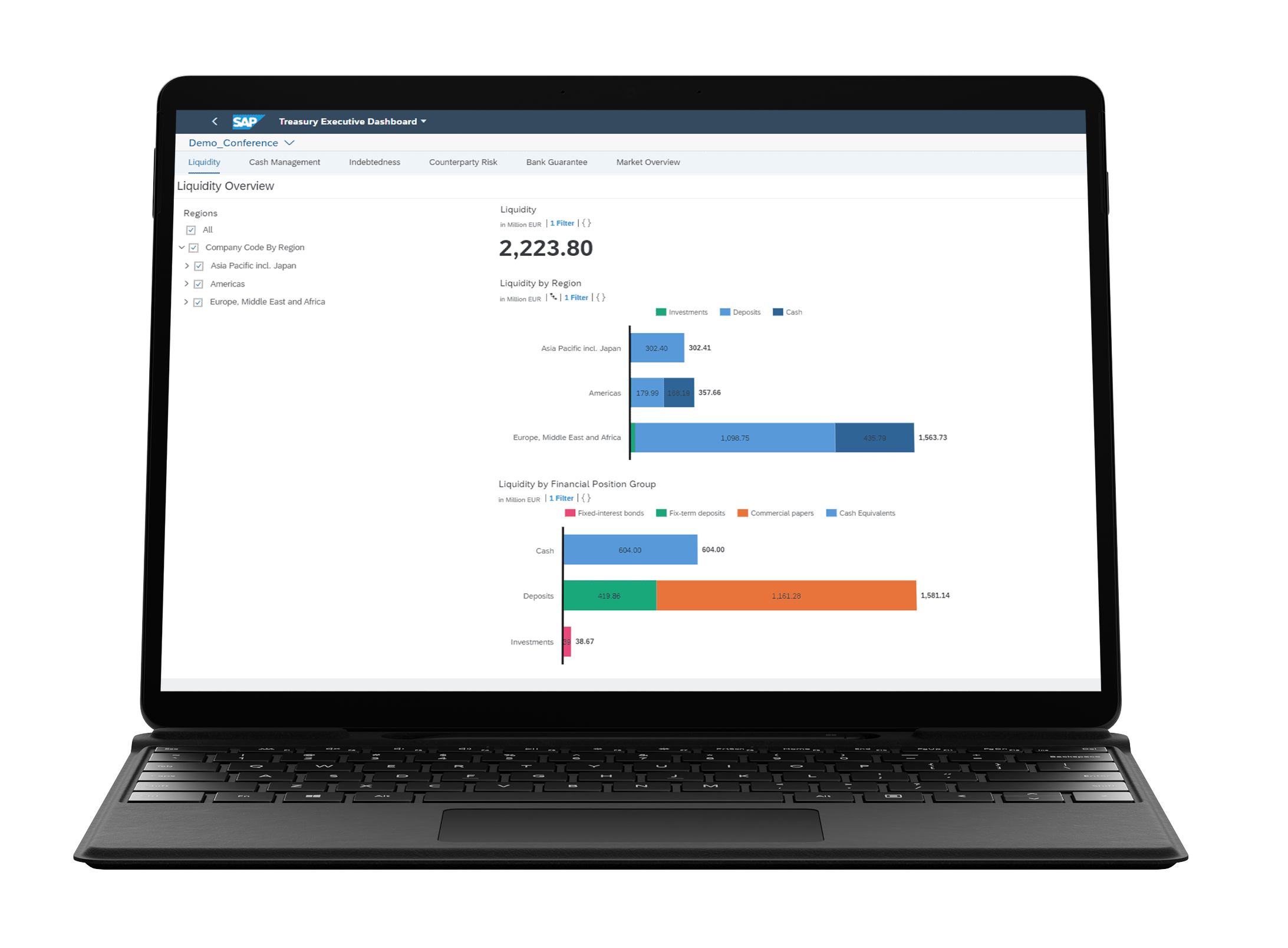
SAP TREASURY AND RISK MANAGEMENT (TRM)
The SAP S/4HANA Treasury and Risk Management solution enables automated financial transactions for foreign exchange risk management, investments, and borrowing – fully integrated with cash forecasts, payments, market data, and financial accounting. The solution offers you the following benefits:
- Analyzes and optimizes your financial business processes
- Automates financial transactions
- Improves liquidity
It also offers integration scenarios for other SAP solutions such as SAP Trading Platform Integration, SAP Market Rates Management, SAP Multi-Bank Connectivity, and SAP Trade Repository Reporting.
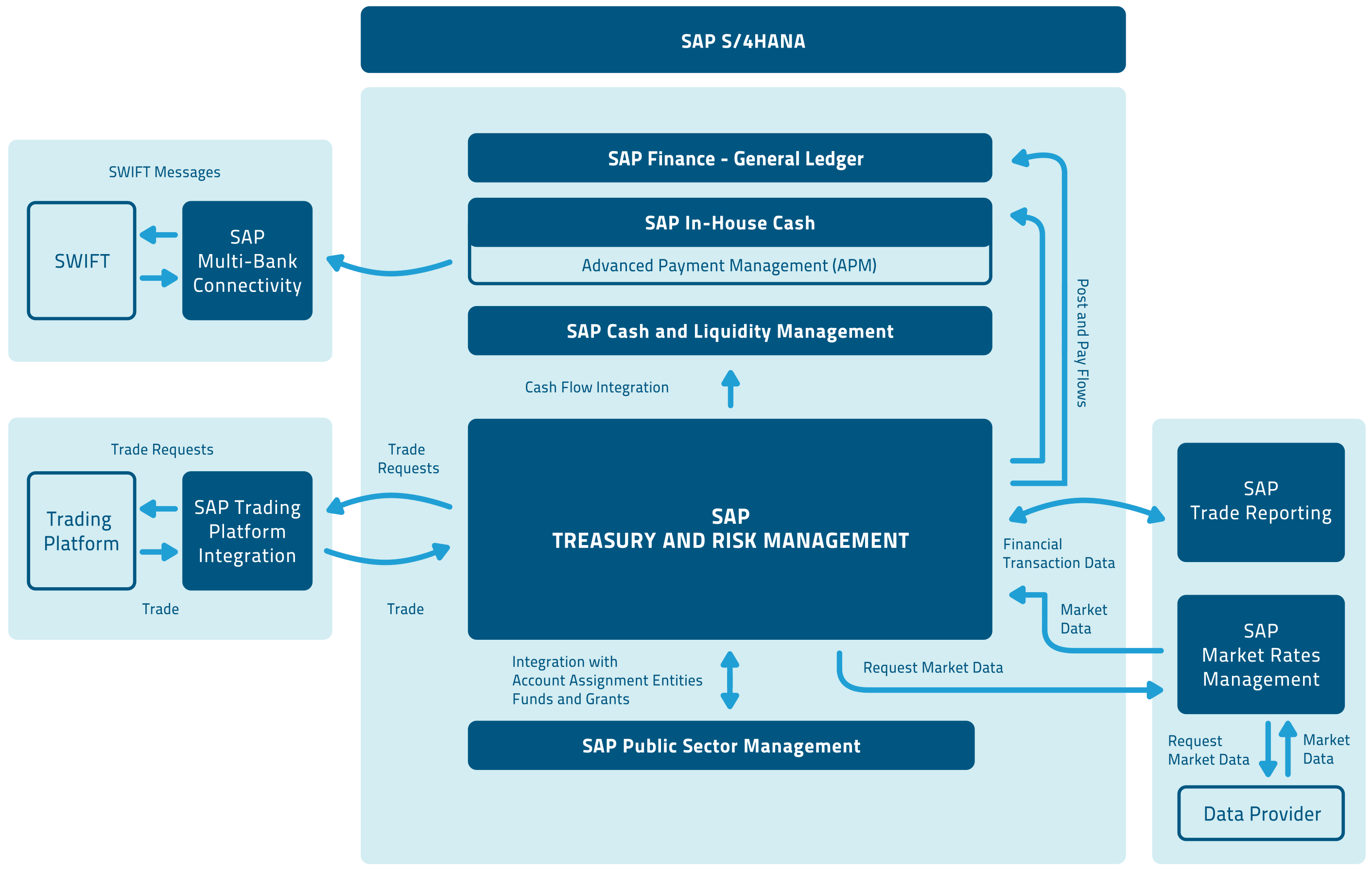
Figure: Financial supply chain management under SAP S/4HANA
COMPONENTS AND BUSINESS PROCESSES
SAP Treasury and Risk Management consists of various components that provide all the functions for the various SAP Treasury and Risk Management processes.
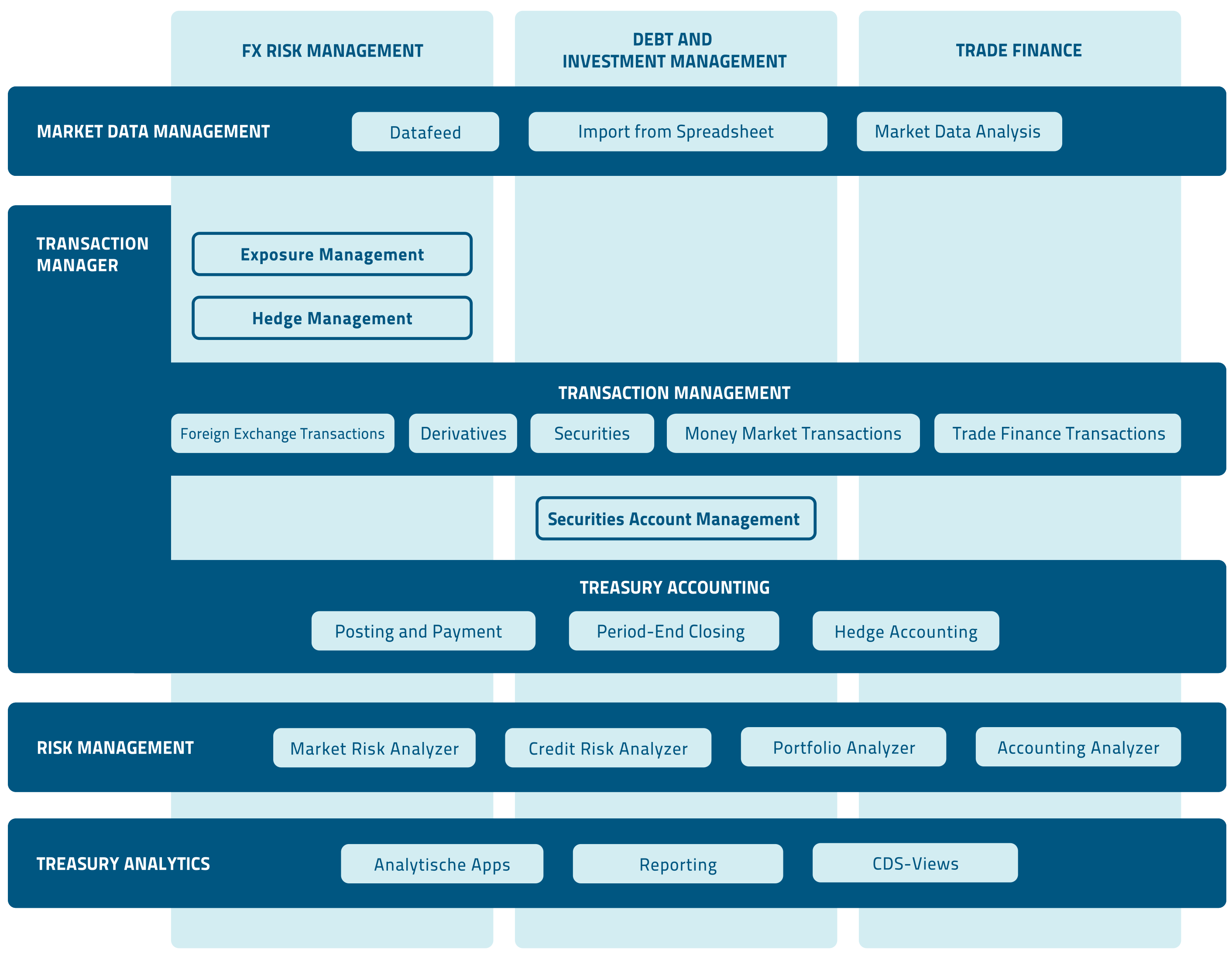
SAP TRANSACTION MANAGER
The Transaction Manager provides you with functions for capturing important data from your financial transactions and forwarding it to Financial Accounting. It supports both traditional treasury departments with a more trading-related focus and asset management departments. You therefore gain the advantage that all types of transactions – financial flows, correspondence, etc. – can be processed on the same platform. In addition, the Transaction Manager lets you manage and evaluate financial transactions throughout their entire lifecycle.
- Supports the management of financial transactions (trading and settlement)
- Helps to exploit existing rationalization potential
- Automates typical processes
- Allows flexible reporting and evaluation methods for financial transactions, holdings, and portfolios
- Integration into Treasury and Risk Management: enables direct recording of the effects of financial flows on liquidity and interest rate risk
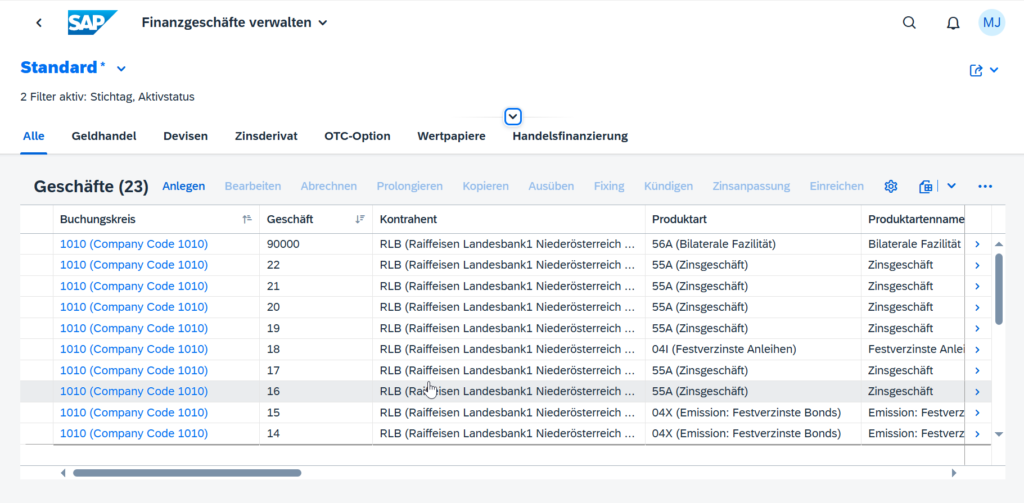
SCOPE OF FUNCTIONS:
Straight-through processing
From the recording of all transaction types to their transfer to accounting, Transaction Manager pursues the implementation of the straight-through processing (STP) principle, which is made possible by continuous development, uniform functions, and basic structures for financial transactions.
Transaction and portfolio management process
Depending on the product type, you can flexibly design the processes for transaction and portfolio management, allowing you to take advantage of rationalization while at the same time increasing process reliability, e.g., through the dual control principle in the approval process.
Accounting
The following functions are available in accounting:
- Management of portfolios in parallel
- Automatic posting functions for transferring data to financial accounting
- Update of the general ledger in real time
- Flexible functions for processing payment transactions
- Valuation and accrual procedures
- Complete documentation of business transactions
Central functions
The Transaction Manager includes central functions such as:
- Status-controlled business processing
- Real-time reporting
- Information system: This comprehensive function provides you with a complete overview of your business relationships. By using uniform organizational elements and integrating them into Transaction Manager, they can also be mapped in other SAP applications.
Market data collection
With the real-time data feed, SAP provides you with an interface through which data can be imported from any information provider or data feed platform. In addition, you can transfer market data from a spreadsheet or enter the data manually.
Market data management is available across all Treasury and Risk Management functions.
Information system
The efficient information and reporting system in Transaction Manager offers you the following functions:
- Central access to information
- Direct and restricted data selection
- Wide range of evaluation options
- Hierarchical arrangement of the report structure
- Aggregated view of a business partner's total exposure
- Tracking the history of financial transactions, cash flows, and financial accounting processes
- Monitoring of financial transaction deadlines
- Support for compliance with statutory reporting requirements:
SAP MARKET RISK ANALYZER
With the Market Risk Analyzer, it is possible to subject financial management tasks, such as liquidity management and cash management, to a very detailed analysis of risk management.
The Market Risk Analyzer includes a wide range of position valuations and instruments:
- Mark-to-showcase evaluations
- Money-related exchanges
- Risk and return indicators
- Value-at-risk
- Profit and loss analysis
This module makes it easier for your company to make decisions, develop risk mitigation strategies, and optimize the performance of your portfolio. With real-time data monitoring, scenario analysis, and customizable reporting, Market Risk Analyzer improves risk management practices and ensures financial stability and compliance in dynamic market environments.
Do you have any questions? We’re here to help!


SAP CREDIT RISK ANALYZER
This TRM module enables the analysis and management of default risks. Default risk refers to the potential loss that arises when a business partner fails to meet its contractual obligations. The tightening of risk control regulations highlights the importance of analyzing and limiting insolvency risks. For business reasons, a system for measuring, analyzing, controlling, and limiting counterparty/issuer risks is essential.
With the Credit Risk Analyzer, SAP provides the basis for determining credit risk in the form of credit exposures.
The calculation is based on the following approaches:
- Standard approach: External ratings from well-known rating agencies are used to determine credit risk.
- Simple IRB approach
- Advanced IRB approach
In the IRB (Internal Rating Based) approaches, risk assessment is carried out using internal rating models, which, however, require approval by the banking supervisory authority.
The analysis and management of default risks is the main function of the Credit Risk Analyzer. The first step is to cover specific risks for a company’s financial transactions, which also includes risk management using limit specifications, flexible limit management, and in-depth reporting.
SAP PORTFOLIO ANALYZER
With the Portfolio Analyzer module, you can calculate and monitor the returns on your financial investments.
You can measure the profits from investments from different perspectives and using different methods. The calculations are based on the structure of your portfolio in the portfolio hierarchy. You have the option of defining hierarchies using characteristics. The investment success is broken down according to its causes based on the portfolio structure.
To calculate the return, the Portfolio Analyzer offers methods for calculating the time-weighted return (TWRR) and the money-weighted return (MWRR). To calculate the TWRR, the Portfolio Analyzer also offers the Dietz and modified Dietz approximation methods. In addition to return figures, you can also define benchmark returns and compare them with the returns of your portfolios.
SAP MARKET RATES ANALYZER
Market Rates Management enables you to obtain data for the successful management of your financial transactions. As a preconfigured and flexible tool, you can use Market Rates Management to automatically transfer various market data from different data providers into SAP.
It includes upload and download APIs that allow you to upload and download market data in a format that is compatible with the SAP S/4HANA system. You can automatically distribute the downloaded prices to all networked systems in your IT landscape. The application supports 12 market data types.
- Automate your daily import processes
Automatically import daily market prices from your chosen provider or your own data source.
- Get average and historical rates
Retrieve market data for a date range and average prices at the end of the month. If you enter a date range in your request payload, your request will be treated as a request for historical rates. You can also request average prices at the end of a month.
SAP TRADE REPOSITORY REPORTING
As a company, you are required by financial market regulations to report your derivative transactions to a trade repository (EMIR).
The trade repository reporting functions support you in the process of creating transaction register reports (EMIR). Once the checks have been completed and release management has taken place, the transaction register reports are prepared for further transfer to a transaction register. You also have the option of having incoming messages from the transaction register read and interpreted by the application server and stored in document management.
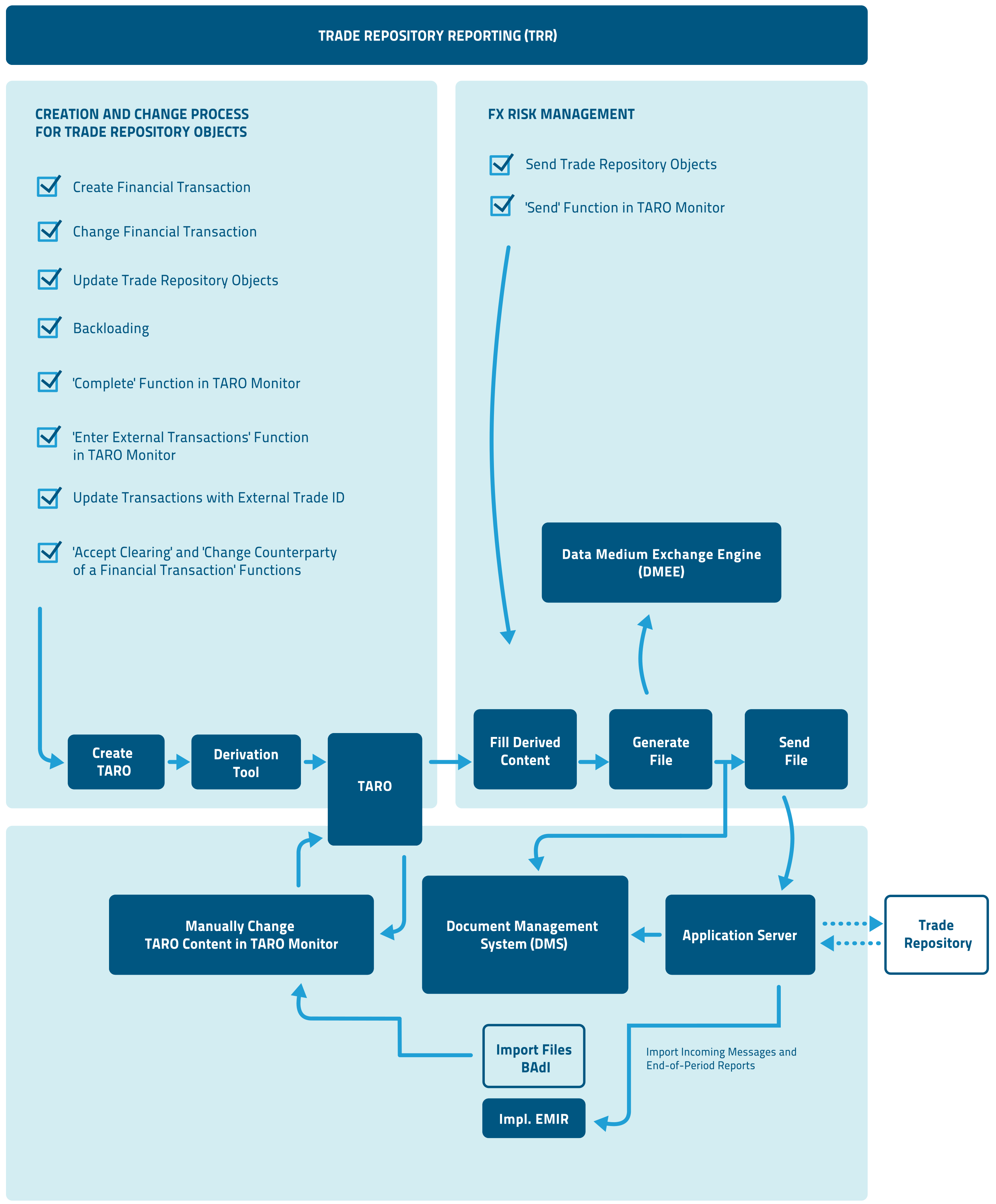
Figure: Overview of transaction register reporting (TRR)
Satisfied customers
Many organizations and companies in the DACH region rely on Unittwo Consulting to develop customized and sustainable solutions for their SAP systems.







Inquiries and contact
Do you need support with an SAP project? We are here for you – feel free to contact us by email or phone or use the contact form to get in touch.
Unittwo Consulting
Körnergasse 7/1, 1020 Vienna
Business hours
Mon–Fri: 9 a.m.–6 p.m.